
Most businesses are not short on monitoring tools.
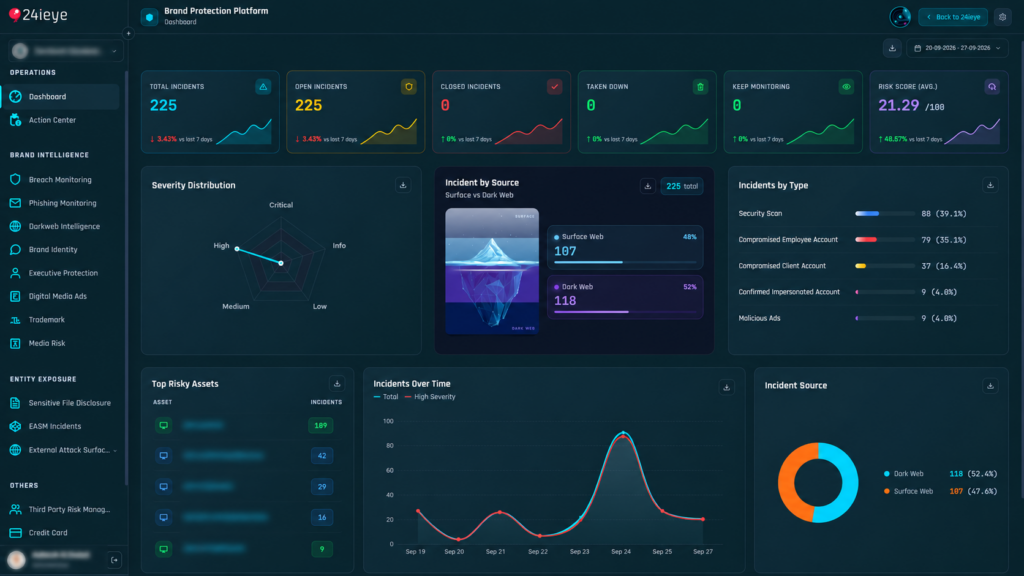
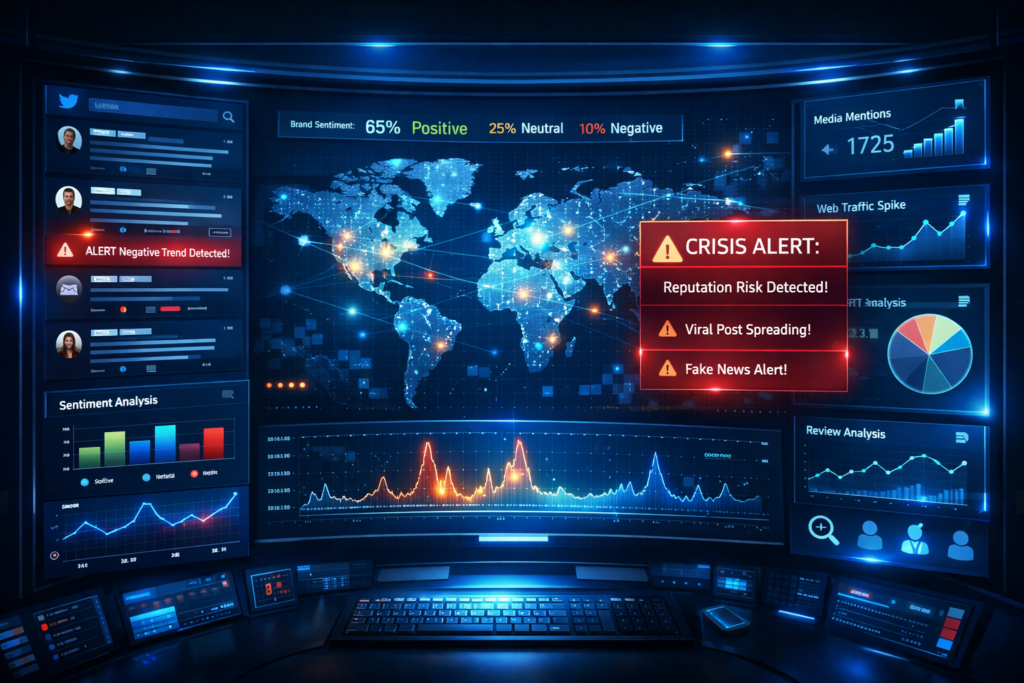
They have Google Alerts running in the background. Social media dashboards update in real time. Review notifications appear instantly. Daily media summaries arrive in inboxes every morning.
On paper, everything looks under control.
Yet organisations continue to find themselves asking uncomfortable questions.
How did we miss this story?
Why did we only find out about this after our customers started talking about it?
Why are stakeholders asking questions before our teams even know a conversation exists?
The answer is surprisingly simple.
Businesses are not monitoring everything. They only think they are.
This is not a technology problem. It is a visibility problem.
Over the past decade, organisations have accumulated layers of media monitoring solutions designed to solve individual challenges. Marketing teams monitor social media. PR teams track news coverage. Customer service teams watch reviews. Communications teams manage executive visibility.
Every system performs its role effectively.
The problem is that important conversations rarely stay inside one channel.
The businesses that react first are rarely the businesses with the most data. They are the businesses that recognise patterns before everyone else does.
That distinction matters more than ever.
According to market research from Grand View Research, the global media monitoring tools market was valued at approximately USD 5.46 billion in 2024 and is projected to exceed USD 12 billion by 2030. Organisations are investing heavily in visibility technologies, yet many continue to struggle with delayed responses, fragmented information, and blind spots.
The challenge is no longer access to information.
The challenge is understanding which information matters before everyone else does.
The Illusion Of Complete Visibility
One of the biggest misconceptions in modern media monitoring is the belief that more tools automatically create better visibility.
They do not.
In many organisations, every department has developed its own way of monitoring information.
Marketing tracks engagement.
PR tracks media coverage.
Customer support tracks customer sentiment.
Corporate communications track executive mentions.
Leadership receives summary reports.
Individually, these systems work.
Collectively, they often create isolated pockets of information.
This creates a dangerous assumption that every important conversation will eventually surface somewhere within the organisation.
Unfortunately, public conversations do not follow organisational structures.
They move freely between channels.
A story that begins in a local newspaper can appear on television, spread through digital publications, trigger LinkedIn discussions, and eventually shape customer perceptions within a matter of hours.
If every team only sees one piece of the story, nobody sees the complete picture.
The Silo Effect In Action
Imagine a regional newspaper publishing an early story about supply chain disruptions affecting a major industry.
The story never trends on social media.
No customers have complained yet.
Marketing teams do not see it.
Customer support teams do not see it.
No internal alarm is raised.
Twenty-four hours later, a national television broadcaster covers the same story.
Industry commentators amplify it.
Stakeholders begin asking questions.
Leadership suddenly enters reactive mode.
The organisation is now responding to a narrative that had already been developing for an entire day.
The problem was never a lack of monitoring tools.
The problem was fragmented visibility.
This scenario happens far more often than businesses realise.
Because organisations do not have a monitoring problem.
They have a visibility problem.
The Four Visibility Gaps Businesses Often Overlook
The greatest risk in modern media monitoring is not missing every conversation.
It is missing the conversations that matter most.
There are four visibility gaps that quietly exist inside many organisations.
| Visibility Gap | What Happens | Business Impact |
| Channel Gap | Teams monitor selected channels only | Important stories go unnoticed |
| Context Gap | Mentions are detected without understanding | Risks are underestimated |
| Speed Gap | Information arrives too late | Organisations become reactive |
| Intelligence Gap | Data remains disconnected | Decisions become slower |
1. The Channel Gap
Many businesses monitor the channels they can easily access rather than the channels that influence decision-makers.
Social media dominates attention, but not every influential conversation happens there.
Important discussions also happen within:
- Industry publications
- Regional newspapers
- Television broadcasts
- Radio programmes
- Podcasts
- Editorial websites
- Specialist forums
- Professional communities
Ignoring one ecosystem creates an incomplete picture.
A business may believe it understands public perception while simultaneously missing the conversations shaping investor confidence, stakeholder trust, or industry sentiment.
2. The Context Gap
A mention is not intelligence.
A notification is not understanding.
Knowing that your organisation has been mentioned somewhere is useful.
Knowing why it was mentioned, who amplified it, and how it may evolve is where real value exists.
Modern media intelligence is built on context, not alerts.
Without context, organisations often underestimate small stories that later become significant business challenges.
3. The Speed Gap
The speed of information has fundamentally changed.
Conversations no longer move in daily news cycles.
They move continuously.
By the time many organisations discover an issue, several audiences may have already formed opinions about it.
Early detection creates options.
Delayed detection creates pressure.
The earlier businesses identify emerging stories, the more control they have over their response.
4. The Intelligence Gap
Businesses are overwhelmed with information today.
However, more information rarely creates better decisions.
Raw data only becomes valuable when organisations can connect multiple signals into one coherent picture.
This is where many businesses struggle.
Thousands of mentions exist.
Hundreds may be relevant.
Only a handful may require action.
The goal of modern media monitoring is not to collect more information.
It is to create clarity.
Why Important Conversations Slip Through The Cracks
Businesses often assume digital tools will capture everything.
In reality, some of the most influential discussions happen outside mainstream digital environments.
Regional publications continue to influence local communities.
Trade journals shape industry perspectives.
Executive television interviews influence investor confidence.
Radio discussions often influence public sentiment within specific markets.
Many of these conversations never trend online, yet they still influence decisions.
This is particularly important for organisations operating across multiple industries, geographical regions, and stakeholder groups.
By the time a story appears everywhere, organisations may already be responding too late.
The strongest media monitoring strategies do not simply collect information.
They identify early signals before they become widespread narratives.
How Stories Actually Spread
A single mention rarely stays in one place.
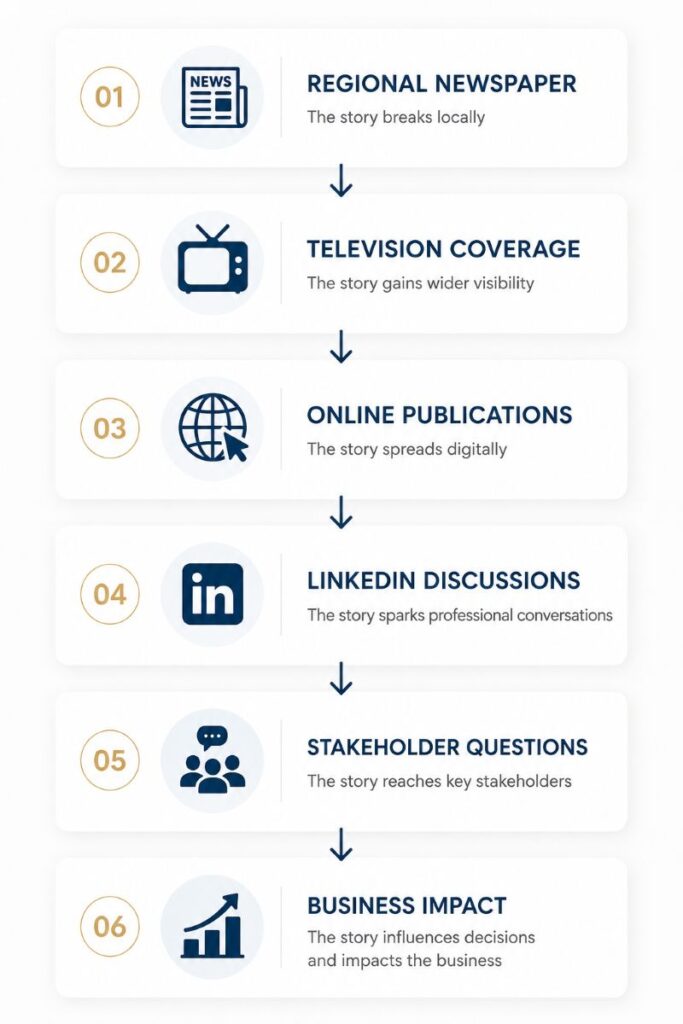
Visibility is no longer measured by how much information an organisation collects.
It is measured by how quickly it can connect disconnected signals before they become larger business challenges.
Collecting More Data Is Not The Same As Understanding It
For years, organisations approached media monitoring as a volume problem.
The assumption was simple: collect more mentions, monitor more channels, and build more dashboards.
But data abundance has quietly created a new challenge.
Information overload.
Many organisations now have access to enormous amounts of information but struggle to convert that information into meaningful action.
Traditional media monitoring often answers a single question.
“Where were we mentioned?”
Modern media monitoring must answer a completely different set of questions.
- Why does this mention matter?
- Who is influencing the conversation?
- Is this an isolated event or the beginning of a larger trend?
- Which stakeholders will be impacted?
- Does this require immediate action?
That shift changes everything.
Data alone does not create resilience.
Interpretation does.
Visibility does.
Decision-making does.
The goal is no longer to gather thousands of mentions every day.
The goal is to identify the handful of signals that deserve immediate attention.
This is also becoming increasingly important as misinformation continues to grow. The rapid spread of synthetic content is also forcing businesses to rethink their monitoring strategies, especially as AI-generated misinformation becomes increasingly sophisticated. According to Cision’s 2025 State of the Media Report, misinformation remains one of journalists’ biggest challenges, increasing the need for organisations to identify inaccurate narratives before they spread across multiple channels.
How Modern Media Monitoring Connects Everything Together
The most effective organisations no longer treat media monitoring as a reporting exercise.
They treat it as an intelligence ecosystem.
Instead of monitoring channels independently, they connect them.
Modern media monitoring generally follows five stages.
1. Data Collection
Information is gathered simultaneously from multiple environments, including:
- Online news publications
- Social platforms
- Television broadcasts
- Radio programmes
- Print publications
- Podcasts
- Forums
- Industry websites
The objective is not to collect everything.
It is to collect what matters.
2. AI-Assisted Processing
Modern systems use technologies such as speech-to-text, optical character recognition, natural language processing, and machine learning to convert enormous amounts of unstructured information into searchable intelligence.
This significantly reduces the time teams spend manually searching for information.
3. Intelligent Filtering
Businesses configure systems to track:
- Brand names
- Executive names
- Product names
- Competitor names
- Industry keywords
- Emerging topics
This prevents teams from drowning in irrelevant information.
4. Contextual Analysis
This is where monitoring evolves into intelligence.
Systems analyse:
- Sentiment
- Audience reach
- Prominence
- Potential risks
- Emerging patterns
The objective is to understand significance, not simply visibility.
5. Actionable Reporting
The final step is often the most overlooked.
Insights must reach decision-makers quickly.
An alert arriving three days late is no longer intelligence.
It is historical information.
The objective is simple.
Move from reactive monitoring to proactive awareness.
Quick Visibility Audit For Communications Teams
Ask yourself three questions.
1. Do your PR, marketing, and communications teams operate from a unified dashboard or separate reporting systems?
2. If an executive is mentioned on a regional radio station right now, how long would it take for the appropriate stakeholders to know?
3. Can your current tools identify the original source of a story rather than dozens of syndicated copies?
If these questions are difficult to answer, there is likely a visibility gap somewhere within your monitoring ecosystem.
What Does Effective Media Monitoring Look Like In 2026?
The expectations have changed.
Businesses no longer need another dashboard.
They need clarity.
An effective media monitoring strategy should answer five questions within minutes rather than hours.
- Where did this story originate?
- Which channels amplified it?
- Who is driving the conversation?
- What level of risk does it present?
- What action should teams take next?
If organisations cannot answer these questions quickly, there is almost certainly a blind spot somewhere in their monitoring strategy.
The future of media monitoring is moving away from passive reporting and towards decision intelligence.
Because organisations are no longer competing for attention alone.
They are competing for awareness.
Why Traditional Media Still Plays An Important Role
Despite the growth of digital platforms, traditional media continues to influence public perception at scale.
Television, radio, newspapers, and industry publications remain highly influential, particularly among policymakers, regulators, investors, and senior decision-makers.
This is one of the biggest blind spots organisations underestimate.
Many businesses believe digital channels represent the entire conversation.
They do not.
Traditional and digital media constantly influence one another.
A television interview may trigger online news articles.
A newspaper story may generate LinkedIn discussions.
A radio segment may influence customer sentiment.
Every channel now operates as part of a connected ecosystem.
This is why organisations seeking broader visibility often integrate dedicated print media monitoring services to track newspapers, magazines, and editorial publications that may never appear within standard search environments.
Many organisations also utilise a specialised print media monitoring service to identify stories before they gain momentum across digital channels.
Similarly, enterprises often incorporate broadcast media monitoring services to monitor television and radio discussions alongside their wider media intelligence strategies.
Ignoring one channel weakens visibility across every channel.
The Goal Is Not More Data. It Is Fewer Blind Spots
The challenge facing organisations today is not a lack of information.
It is a lack of connected intelligence.
Businesses are overwhelmed with dashboards, alerts, notifications, reports, and data streams.
Adding more tools will not automatically create better visibility.
The organisations that perform best are not the ones collecting the most information.
They are the ones connecting fragmented signals before they become larger business challenges.
Because the businesses that react first are rarely the businesses with the most data.
They are the businesses that recognise patterns before everyone else does.
Eliminate Your Brand’s Blind Spots
Counting mentions alone will not protect your reputation, support your stakeholders, or strengthen decision-making.
Connecting the dots will.
If you are unsure whether your current strategy is capturing every critical digital, print, and broadcast narrative, it may be time to reassess how those monitoring systems work together rather than simply adding more tools to the stack.
Frequently Asked Questions
Is media monitoring the same as social media monitoring?
No. Social media monitoring is one component of a broader media monitoring strategy. Media monitoring may also include television, radio, newspapers, digital publications, podcasts, forums, industry websites, and other relevant sources.
Why do businesses still miss important media mentions?
Businesses often use multiple disconnected tools that monitor individual channels rather than creating a unified view of conversations happening across the media ecosystem.
Does traditional media still influence in 2026?
Yes. Traditional media continues to influence policymakers, regulators, investors, journalists, and decision-makers across many industries.
What is the biggest challenge in modern media monitoring?
The biggest challenge is no longer collecting data. It is transforming fragmented information into actionable intelligence that supports faster decisions.